The Art of Taking Time: Why Handcrafted Knitwear Is the New Luxury
There is something quietly radical about a garment that takes time. In a fashion world accustomed to instant collections, constant drops and clothes designed to be replaced almost as quickly as they are bought, a hand-knitted sweater belongs to another rhythm entirely. It begins with a yarn, followed by colour, texture, weight and shape. Then come the hands, the needles and hundreds, sometimes thousands, of individual stitches. There is no shortcut through the process. The garment can only become what it is by allowing the maker to spend time with it.
And something interesting is happening in fashion right now: time itself is becoming desirable.
Knitwear Is Having a Moment
This isn't simply a romantic idea from the world of small ateliers. The fashion industry is paying attention. Vogue has recently highlighted the rise of a new generation of knitwear designers and what it describes as a “neo-knitwear” movement, showing how knitwear is moving beyond the traditional sweater to become a serious field for experimentation, craftsmanship and contemporary design. Vogue — Inside the Neo-Knitwear Boom
That shift is significant. For years, knitwear was often treated as the quieter part of a fashion collection: something practical, something comfortable, something to put on when the statement pieces had been taken off. Now the opposite is increasingly true. The knit itself has become the statement.
Designers are exploring exaggerated proportions, sculptural silhouettes, extraordinary textures and artisanal techniques. The humble sweater is being reconsidered as an object of design—something with volume, personality, tactility and presence. Vogue's coverage points towards something larger than a passing trend: luxury fashion is increasingly responding to a desire for pieces that feel tactile, distinctive and made to last.
For Jeya Daï, this feels less like a new direction than a natural evolution of something we have always believed. A sweater can be much more than something practical. It can be sculpture, softness, silhouette and personal expression at once.
When Craft Becomes Luxury
Luxury has always been about more than the price of an object. At its deepest level, luxury is about rarity, expertise and the things that cannot easily be replicated. A handmade garment contains all three. There is only so much that can be produced by one pair of hands. There are skills that take years to acquire, and there is an individuality that becomes almost impossible to reproduce perfectly.
This is why craftsmanship is increasingly visible in the luxury fashion conversation. The language used by established fashion houses often comes back to a beautiful French concept: savoir-faire—the knowledge, experience and technical ability required to make something exceptionally well. It is more than simply knowing how to make a garment. It is understanding proportion, materials, construction, texture and movement. It is knowing when something is finished and when it still needs attention.
Luxury houses have long protected this knowledge as part of their identity. LOEWE, for example, has built a significant part of its contemporary identity around the meeting of craftsmanship, technical mastery and artistic innovation. The most interesting contemporary craft is not about looking backwards. It is about taking an old skill and giving it a new language.
That is exactly where modern artisan knitwear becomes so exciting.
The Rarest Luxury May Be Time
We live in a world where almost anything can be produced faster, cheaper and in greater quantities. So perhaps the rarest thing is no longer the object itself. Perhaps it is the skilled human time behind it.
Across luxury fashion, there is growing attention on specialist craftsmanship and the people who possess these skills. The demand for highly skilled artisans has even created challenges for couture houses searching for people with the knowledge to preserve and develop traditional techniques.
That tells us something important. Craftsmanship is not unlimited. A skill that takes years to learn cannot suddenly be mass-produced. A human hand cannot be multiplied in the same way as a factory production line. And that makes genuine craftsmanship increasingly precious.
When you buy a handcrafted garment, you are not only buying the finished object. You are buying time.
The Quiet Luxury of Knowing Who Made Your Clothes
Perhaps the most beautiful thing about handmade clothing is also the simplest: you know there was a person behind it.
At Jeya Daï, I design, knit and finish each piece myself. I have been knitting since I was a child, when my mother taught me to knit. What began as something intimate and domestic became, over the years, a language through which I could design clothing.
That history is part of every garment. The stitches are not anonymous. The hands are not invisible. The making is not something hidden behind a label.
This is what slow fashion means to us. Not simply producing fewer garments, but creating a closer relationship between the maker, the material and the person who eventually wears the piece.
When the Maker Becomes Part of the Luxury
There is a difference between buying a knitwear product and commissioning a piece of knitwear. At Jeya Daï, the process remains personal. The colour can be chosen, the proportions can be considered, and the yarn becomes part of the design rather than simply being a commodity hidden behind a label.
I am not a factory producing thousands of identical sweaters. I am the designer and maker behind the garment. That changes the relationship between clothing and wearer.
Your cardigan does not begin its life as one of thousands hanging in a warehouse, waiting for a trend to arrive. It begins with a design, a choice of colour, a conversation and a pair of hands.
This is the essence of bespoke slow fashion: fewer garments, more intention.
From Fast Fashion to Fashion with Feeling
Fast fashion is built around speed: new collection, new trend, new colour, new purchase. Slow fashion asks us to interrupt that cycle.
What if we bought something because we loved it rather than because it was new? What if we chose one exceptional sweater instead of several disposable ones? What if a garment was made only after somebody had decided they truly wanted it?
This is the philosophy behind Jeya Daï's made-to-order knitwear. Many of our pieces are created individually rather than produced in large quantities. Colours can be selected, silhouettes can be considered, and the garment has room to become personal.
It is a small act of resistance against the idea that clothing must be instant. And there is something deeply satisfying about waiting for something that is being made especially for you.
Why Mohair Makes Such Beautiful Knitwear
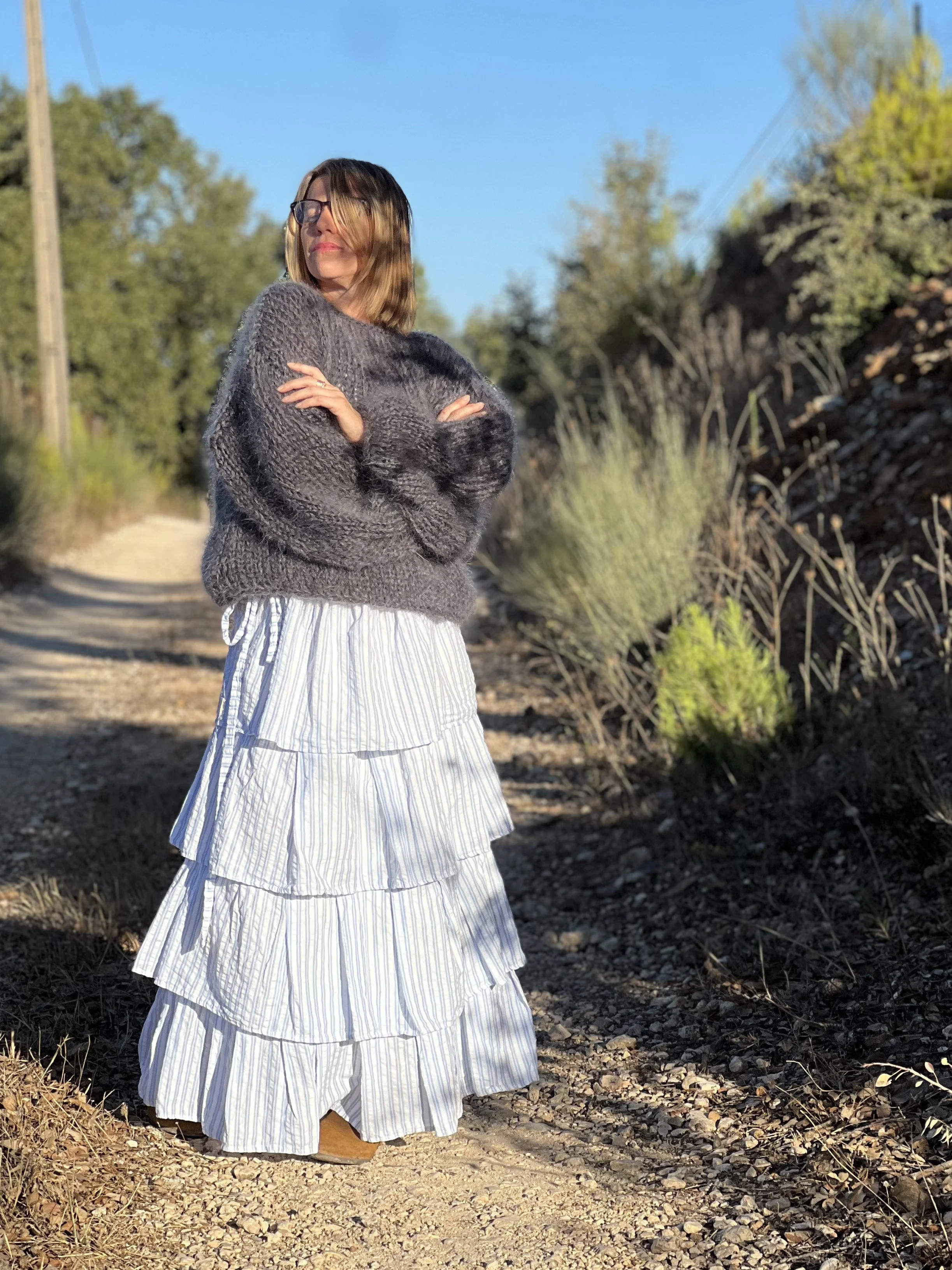
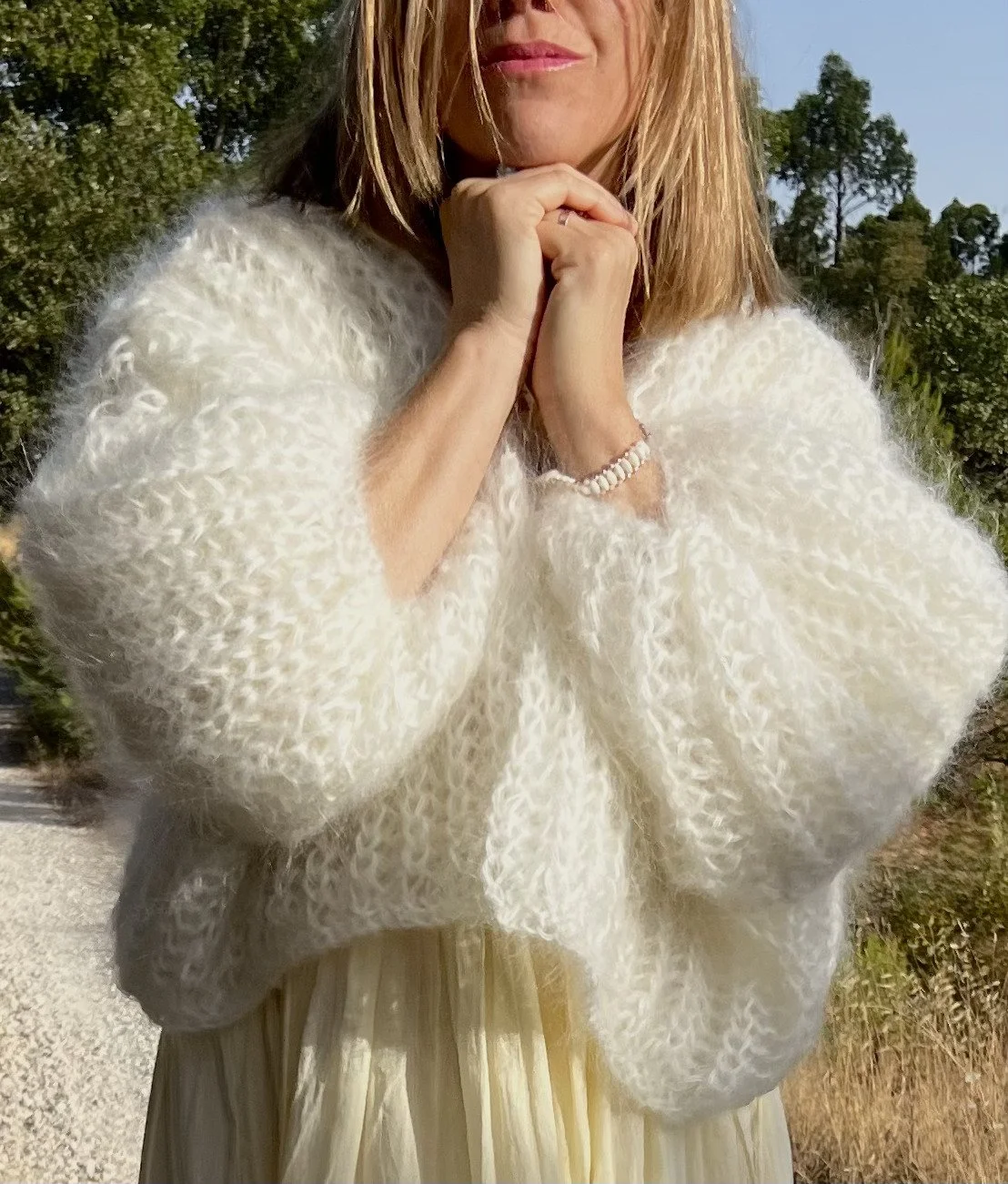
Mohair has a particular magic. It catches the light, creates a soft halo around the yarn and can be incredibly light while still creating extraordinary volume. When knitted into a chunky or bulky structure, mohair becomes almost sculptural.
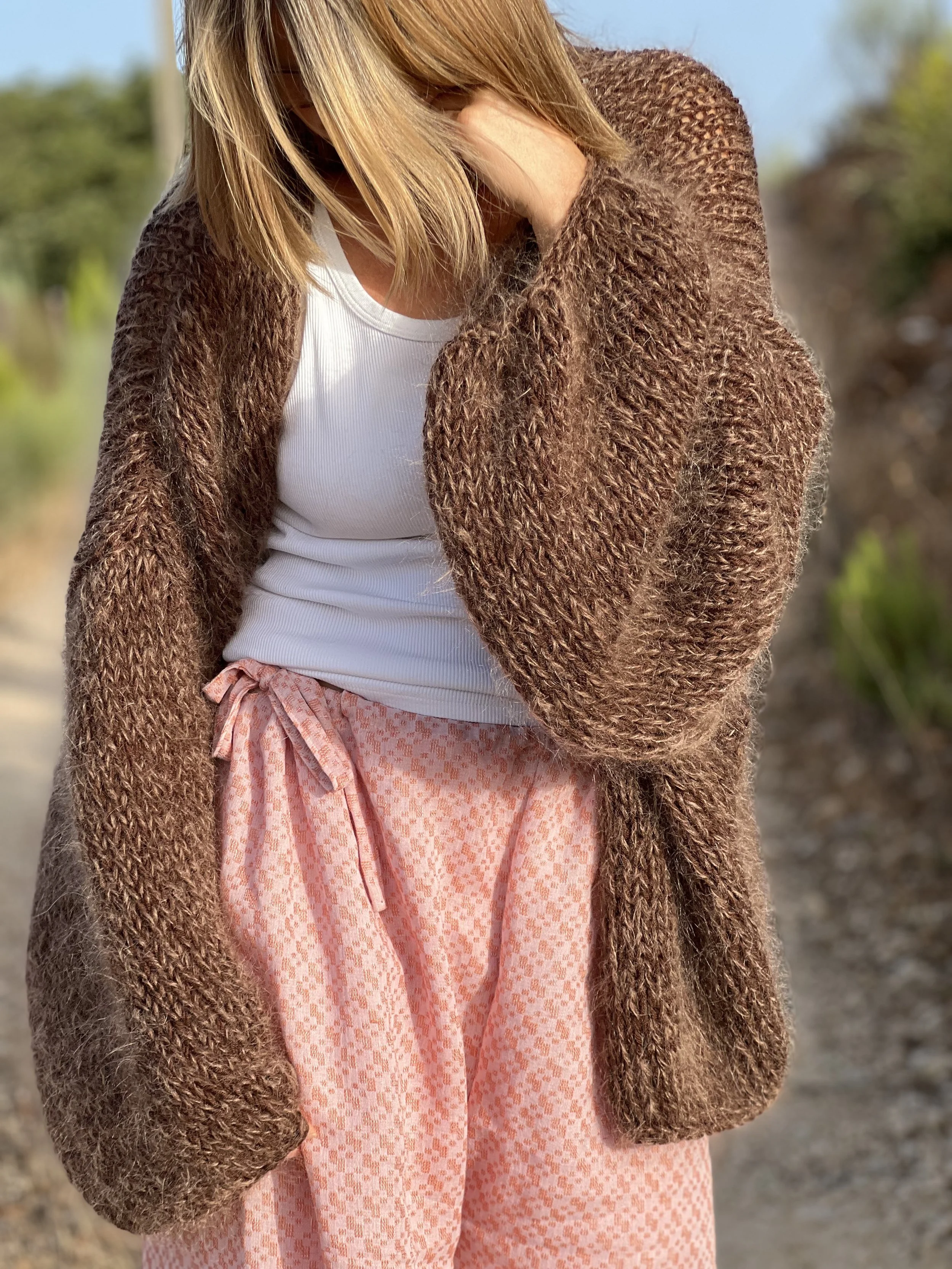
A chunky mohair cardigan can transform a simple outfit without trying too hard. Over a silk dress, it becomes elegant. With tailored trousers, it becomes modern. With denim, effortless. Thrown over the shoulders, it becomes part of the silhouette.
This is why our bulky mohair knitwear is designed with generous proportions and tactile texture. The intention is not to create a seasonal novelty, but a piece with enough character to remain relevant long after the season has changed.
Handmade Doesn't Mean Old-Fashioned
There is sometimes a misconception that artisan clothing must look rustic. It doesn't. Craftsmanship can be extraordinarily contemporary.
A hand-knitted garment can be oversized, architectural, minimalist, sensual or completely gender-free. It can belong in a quiet countryside wardrobe—or on the streets of London, Amsterdam, Paris or Copenhagen.
This is one of the reasons the renewed interest in knitwear is so exciting. The old skill remains, but the language changes. A technique passed from one generation to another can become something completely new when placed into a contemporary silhouette.
That is the beauty of craft. It doesn't have to remain in the past. It can move forward.
The New Language of Knitwear
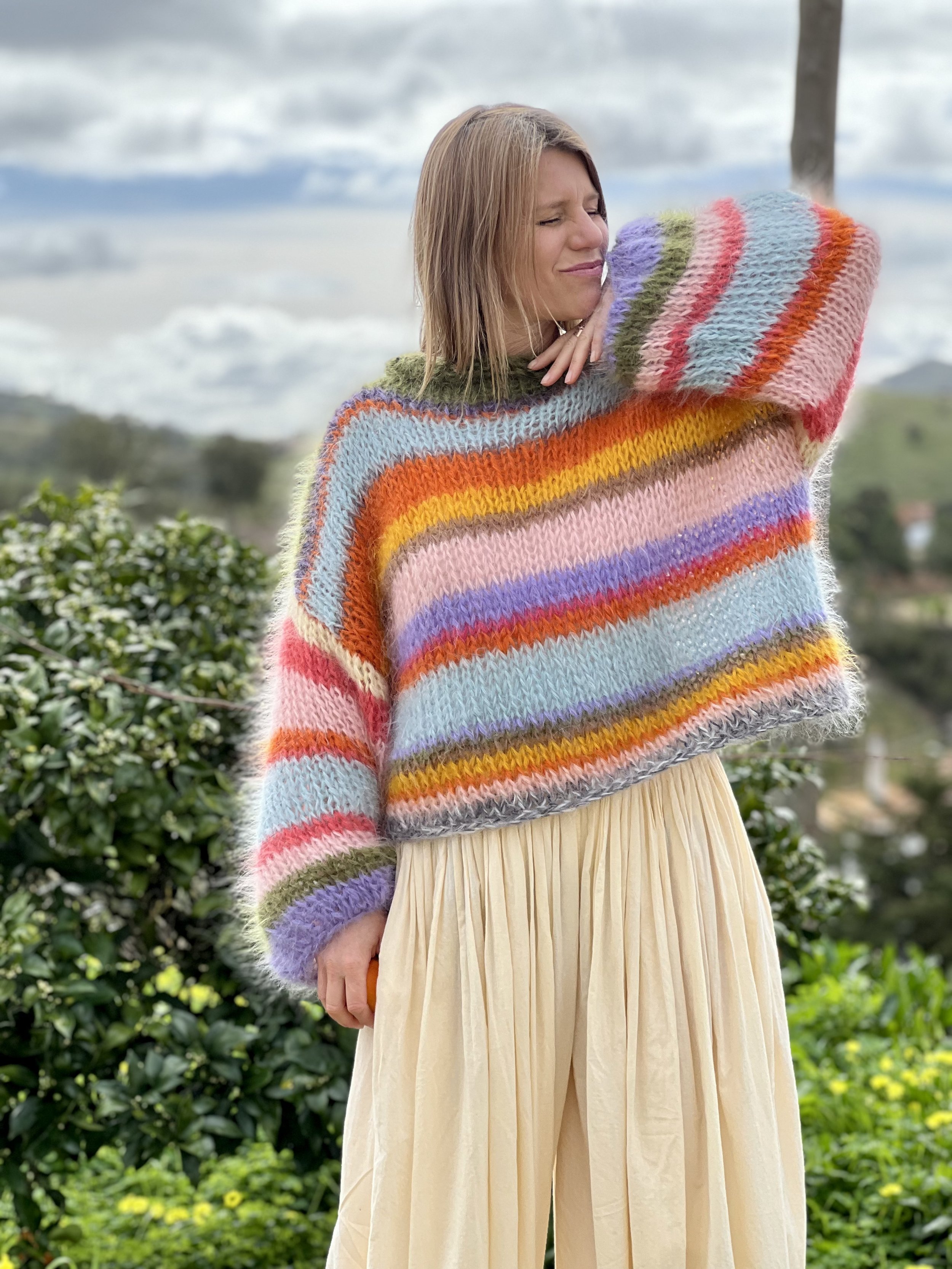
The emerging world of contemporary knitwear is not simply about making sweaters. It is about questioning what a knitted garment can be. Oversized silhouettes create movement. Chunky textures create volume. Mohair creates softness and lightness. Merino and mohair can combine warmth with a refined hand-feel. Colour changes the entire character of a garment.
The result can be minimal or expressive, quiet or dramatic. This is why contemporary artisan knitwear belongs naturally within the wider luxury fashion conversation. The techniques may be traditional, but the attitude is entirely modern.
At Jeya Daï, this means creating pieces that can be worn beyond a particular season or fashion moment. A beautiful oversized mohair cardigan should not need a trend report to tell you when to wear it. It should simply feel right.
The Real Meaning of Slow Luxury
The phrase slow luxury is sometimes reduced to an aesthetic: neutral colours, beautiful interiors, expensive basics. But the deeper idea is much more interesting.
Slow luxury is about value rather than volume. It is about choosing carefully, knowing the material, understanding the craftsmanship and buying less but choosing better. It is also about allowing the things we own to develop a relationship with us.
A beautifully made cardigan does not need to be worn once, photographed and forgotten. It can become the piece you reach for every winter, the thing you take on every journey, the garment that becomes softer and more familiar with time.
That is a very different relationship with fashion.
A Garment Should Have a Life
At Jeya Daï, we don't believe a garment's life ends when it leaves the atelier. In many ways, that is when it begins.
The sweater travels. It goes into someone's suitcase. It becomes part of a morning ritual, an evening out, a Sunday walk or a long flight. It gathers memories. It is worn differently as its owner changes.
That is what makes timeless knitwear so powerful. Timeless does not mean plain. It means that the garment has enough integrity to live beyond a trend.
The most successful piece in your wardrobe may not be the one that was fashionable for one season. It may be the one you continue reaching for ten years later.
From One Woman to Another
There is something especially meaningful to me about making clothing by hand. My mother taught me to knit. Now I create garments for another generation. That thread—from one woman to another—is part of the spirit of Jeya Daï.
The name may be contemporary. The silhouettes may be modern. But the act itself is ancient: one person making something carefully for another person.
That is perhaps the oldest form of luxury there is.
Jeya Daï: Artisan Knitwear Made in Portugal
Jeya Daï is an independent fashion atelier based in Portugal, creating handcrafted knitwear, bespoke clothing and slow fashion pieces with an emphasis on beautiful materials, individuality and craftsmanship.
Our knitwear includes chunky mohair cardigans, oversized mohair sweaters, bulky mohair knitwear and merino-mohair pieces, created in carefully considered colours and contemporary silhouettes.
Many pieces are made to order. There are no enormous seasonal quantities waiting to become yesterday's fashion. Instead, the focus is on creating something worth keeping: something you can wear your way, something that feels like yours.
Why Buy One When You Can Have It Made for You?
There is something special about choosing rather than simply selecting. Choosing the colour. Choosing the shape. Choosing a garment because it speaks to your own wardrobe rather than because it happens to be hanging in a shop window that season.
This is where bespoke knitwear becomes particularly personal. At Jeya Daï, selected knitwear can be created in colours chosen by the wearer, making the final garment more individual and less like something taken from a mass-produced collection.
The result is not necessarily louder. It is simply more personal.
And perhaps that is the ultimate luxury: not having something everyone else has, but having something that feels unmistakably yours.
The Future May Belong to the Hands
Perhaps the most interesting thing happening in fashion is not another new trend. It is the rediscovery of something very old: the human hand, the skill of making, the patience to create and the understanding that an object can become more valuable because someone cared enough to spend time on it.
Fashion may continue to move quickly. But perhaps we don't have to.
We can choose differently. We can buy less. We can choose craftsmanship. We can support independent designers and artisans. We can wear our clothes for longer. And we can remember that the things closest to us do not have to be the things produced fastest.
At Jeya Daï, we believe there is beauty in taking the long way.
One yarn. One design. One pair of hands. One garment at a time.